Riser recliners and joint pain: what a chair can and cannot do
Comfort · 4 minute read
Prepared and checked by Comfort & Recline showroom team.
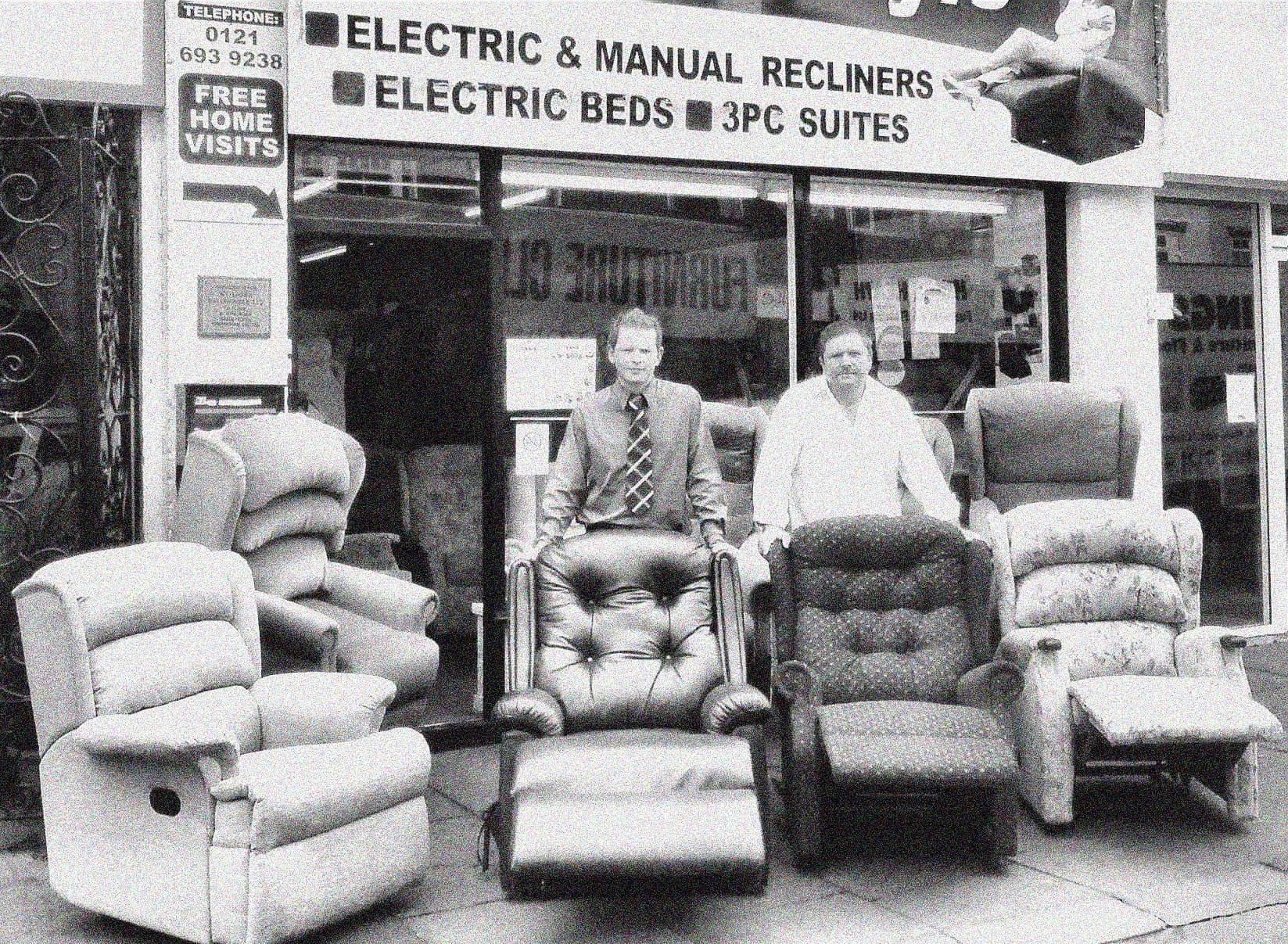
Scott and his dad Chris outside their Kings Heath shop in 1999
The short answer
A riser recliner cannot treat arthritis or joint pain, but a well-fitted chair may reduce the effort of sitting, standing and changing position. Fit matters more than extra features. New or worsening pain, weakness, numbness or falls need professional advice before a chair purchase.
See chairs featured in this guidePublished · Updated
Jump to a section in this guide
Who this guide helps
For people living with joint discomfort and relatives helping them consider a riser recliner as part of everyday comfort and mobility.
What a riser recliner is, and is not
A riser recliner is furniture with a powered action, not a medical device, and it is not a treatment for arthritis or any other condition.
What it can do is remove some of the physical work from sitting and standing, reduce the effort of changing position, and make long rests more comfortable.
For many people with joint pain, that reduction in daily effort is significant: fewer painful transfers each day and more position changes without needing help.
Features people with joint pain often value
The rise action removes the hardest single movement, pushing up from a low seat. Independent back and footrest control makes it easier to change pressure points without standing up.
Seat tilt on triple-motor actions spreads weight across the body instead of loading the hips.
Heat pads, adjustable lumbar support and headrests each add comfort for some users. None of these are treatments, but comfort features that get used daily are worth paying for.
- Rise action: removes the push-up effort
- Dual motors: change position without standing
- Seat tilt: spreads pressure away from hips
- Heat and lumbar adjustment: comfort extras
Fit matters more than features
A badly sized chair can aggravate joint pain: a seat that is too low deepens knee bend, and one that is too deep drags the hips forward and rounds the back.
This is why trying the exact chair, in the size you would buy, matters more for painful joints than for anyone else.
Bring the intended user to the showroom, sit through a full action cycle, and check that getting in and out feels easy at the end of the demonstration, not just at the start.
When to involve a clinician
If pain is new, worsening, or accompanied by numbness, weakness or falls, see a GP or physiotherapist before buying.
An occupational therapist can also assess whether a riser recliner is the right intervention, or whether rails, raisers or other aids would help alongside it.
A reputable retailer will happily wait for that advice; a chair that sits unused because it was bought for the wrong problem helps nobody.
Your showroom checklist
- Treat the chair as furniture, not medical treatment
- Check fit before adding comfort features
- Try several position changes without rushing
- Notice whether sitting and standing feel easier
- Avoid claims that a chair will cure pain
- Seek clinical advice for new or worsening symptoms
Sources and further reading
Chairs to explore
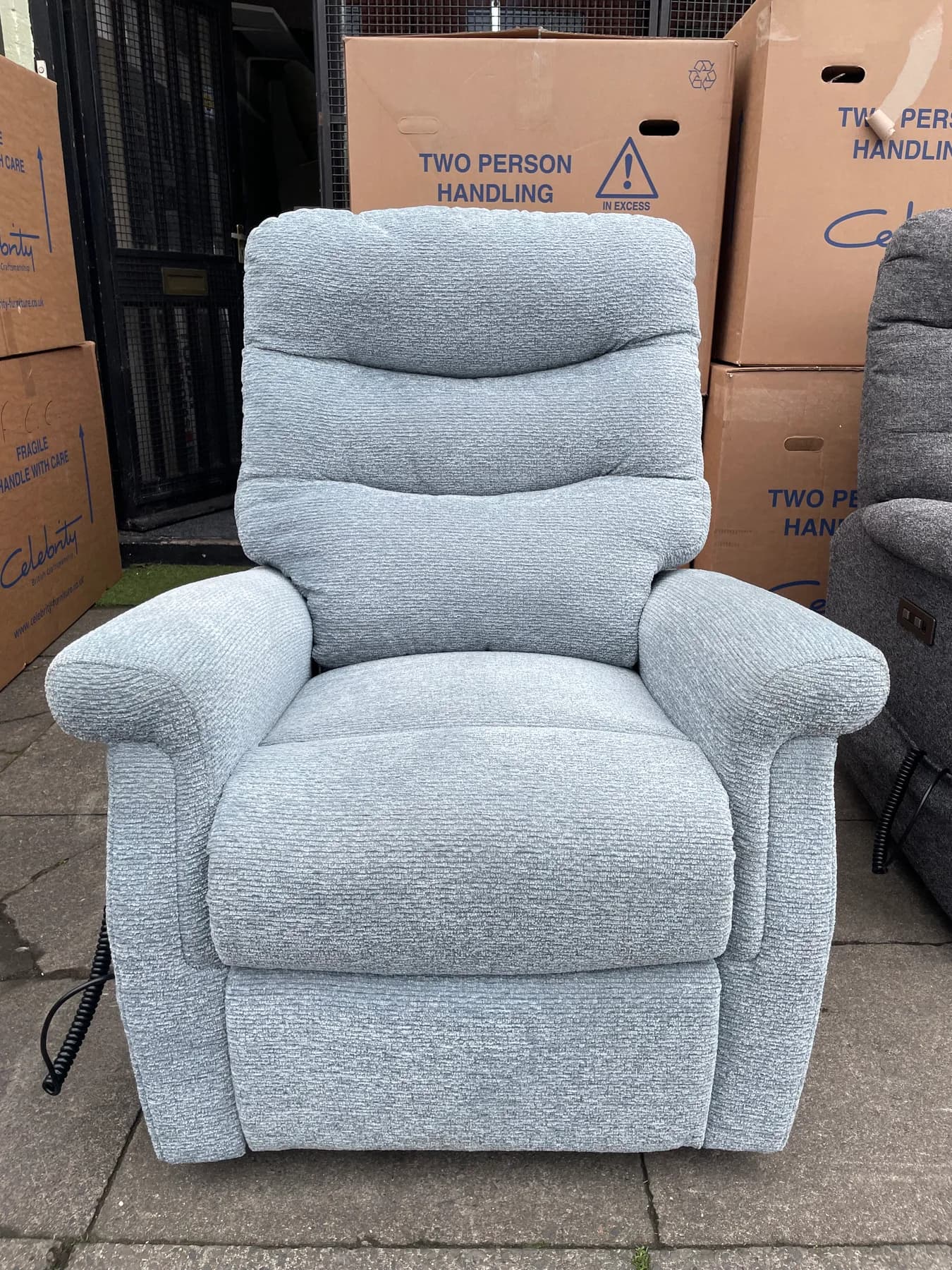
These photos show individual chairs in our showroom. Call Scott to confirm price and availability.
 In stockCall to confirm
Hollingwell Atlanta Aqua
Celebrity Hollingwell
- Size
- Standard
- Action
- Cloud Zero triple-motor riser recliner
- Cover
- Atlanta Aqua
 In stockCall to confirm
Canterbury Cloud Zero Chocolate
Celebrity Canterbury
- Size
- Standard
- Action
- Cloud Zero triple-motor riser recliner
- Cover
- Filey Chocolate