VAT relief on riser recliners: who qualifies and how it works
Costs · 4 minute read
Prepared and checked by Comfort & Recline showroom team.
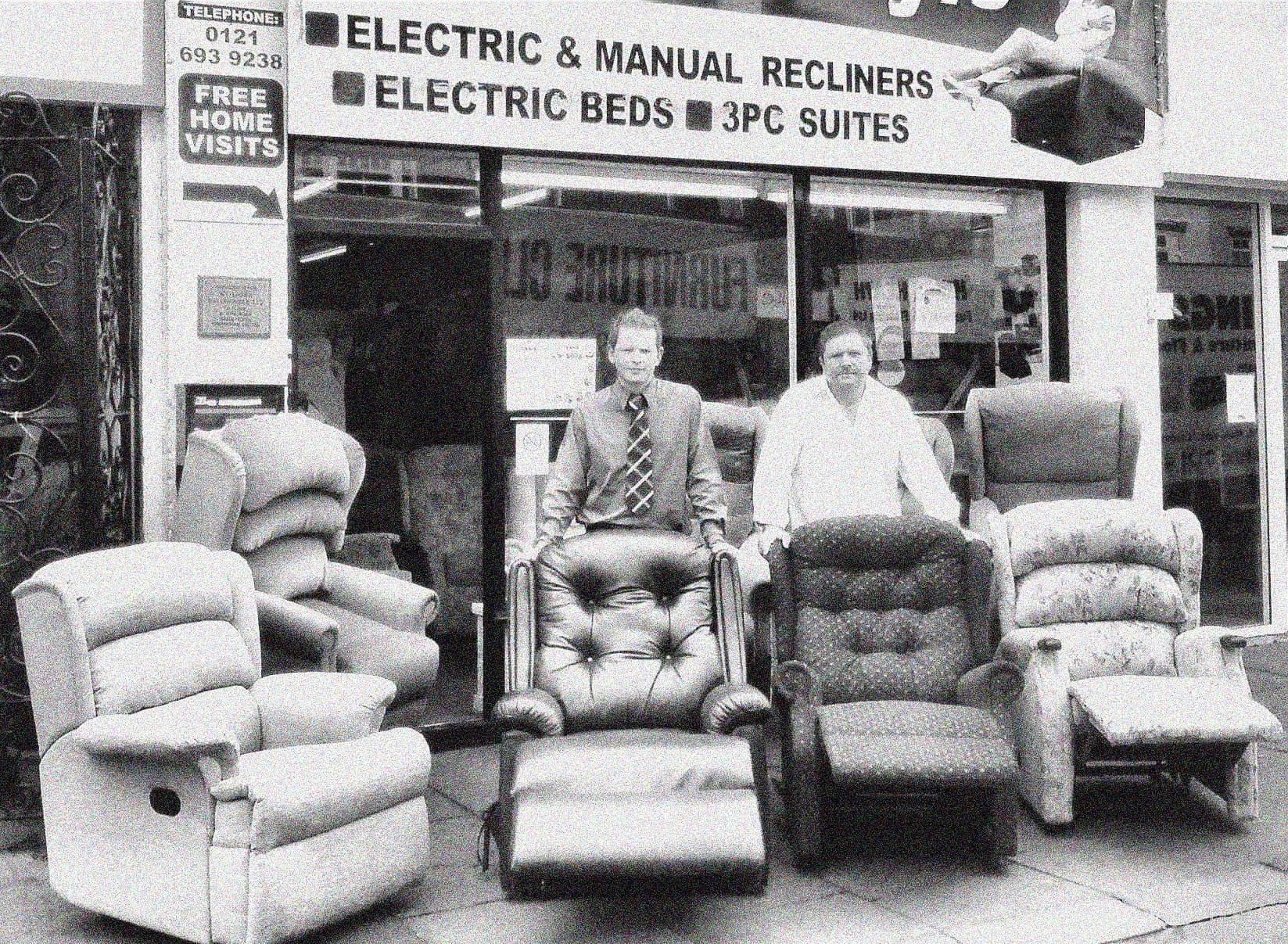
Scott and his dad Chris outside their Kings Heath shop in 1999
The short answer
A qualifying disabled or chronically sick person may be able to buy an eligible riser recliner without VAT for personal or domestic use. Age alone does not qualify. The supplier needs an eligibility declaration, so discuss the user’s circumstances before the final price is agreed.
See chairs featured in this guidePublished · Updated
Jump to a section in this guide
Who this guide helps
For a chair user, relative or carer who wants to understand UK VAT relief before speaking to a retailer. This is general guidance, not individual tax advice.
The short answer
A riser recliner can be zero-rated for VAT when it is designed for disabled or chronically sick people and the person buying it qualifies.
That covers most riser recliners sold for a named individual with a long-term condition that affects their mobility, including many chairs bought by family members on the user’s behalf.
VAT relief is a legal relief rather than a negotiated discount. The supplier must hold an eligibility declaration and decide whether the goods and sale can be zero-rated.
Who qualifies
The person using the chair must have a physical or mental impairment that has a long-term and substantial effect on their ability to carry out normal day-to-day activities.
Examples commonly include severe arthritis, mobility loss after a stroke or fall, long-term back conditions and conditions that make standing from a low seat difficult.
You do not need to be receiving benefits, and the user does not need to be the buyer: family members and carers can purchase on a qualifying person’s behalf.
- Chronic arthritis or joint disease
- Long-term mobility loss or weakness
- Recovery where the need is clearly long-term
- Purchases made by family or carers for the user
What does not qualify
Chairs bought for general comfort, for a temporary injury expected to heal, or for use by an organisation rather than a named qualifying person are usually standard-rated. If nobody using the chair qualifies, the chair is not eligible.
If you are unsure, describe the situation to the retailer honestly. The supplier is responsible for applying the correct VAT treatment and may ask for more information.
What the declaration involves
The retailer records a simple declaration: the name of the qualifying person, the nature of their condition, and confirmation that the chair is for their personal or domestic use.
No fee is involved and the paperwork is usually completed at the point of order, in person or over the phone.
The relief applies to the chair and, in most cases, to delivery and installation connected with it. Spares and repairs for the chair are also commonly zero-rated when the chair itself qualifies.
Questions to ask before you order
Confirm that the quoted price already excludes VAT or that relief will be applied at the point of sale, and ask for the declaration to be recorded in writing.
If a retailer seems unfamiliar with VAT relief, treat that as a signal to check the final invoice carefully before paying.
Your showroom checklist
- Check the chair is designed for an eligible use
- Describe the user’s long-term condition accurately
- Ask which declaration the supplier needs
- Confirm whether the quoted price includes VAT
- Keep the declaration and final invoice
- Use HMRC guidance when eligibility is unclear
Sources and further reading
Chairs to explore
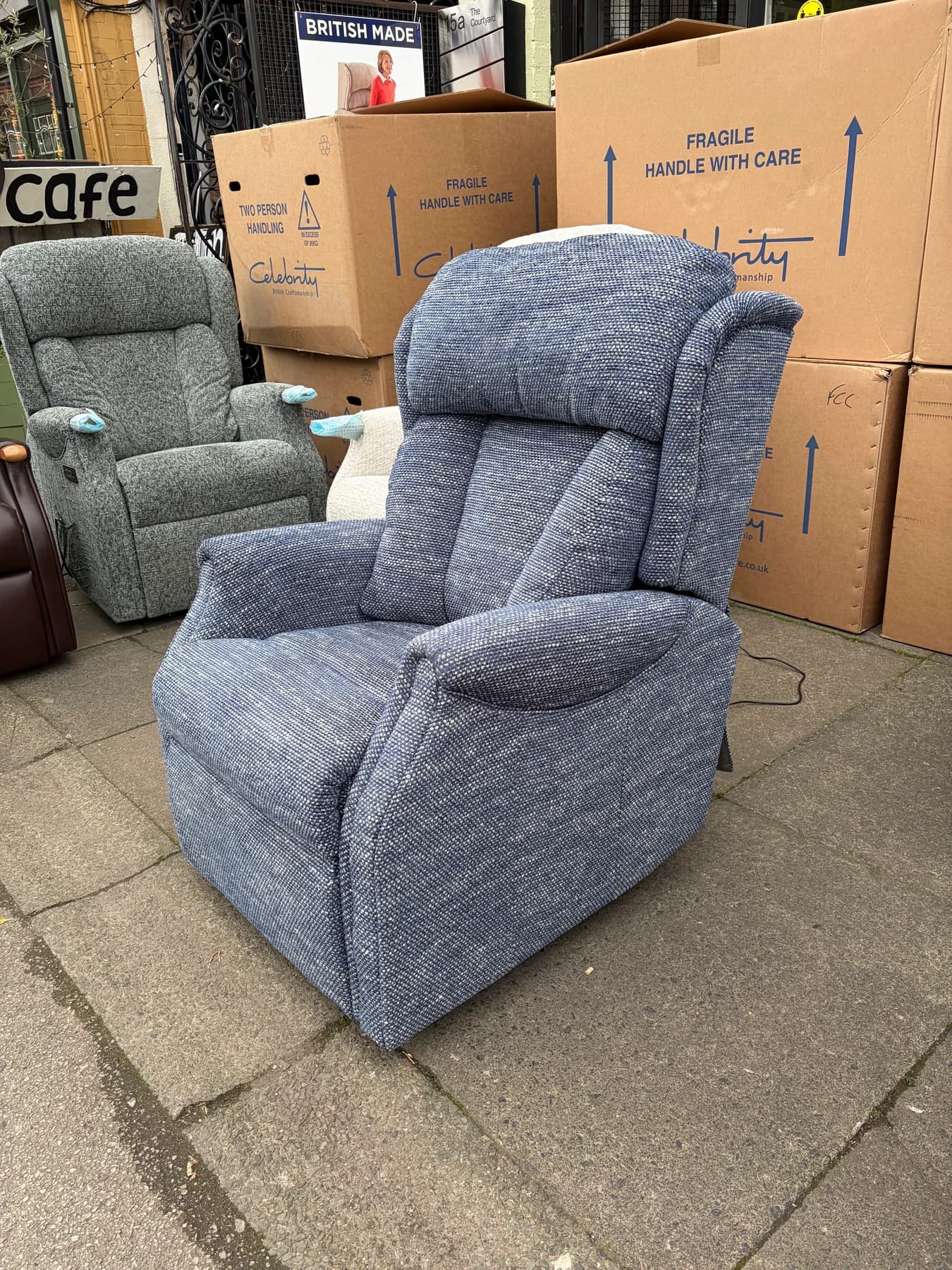
These photos show individual chairs in our showroom. Call Scott to confirm price and availability.
 In stockCall to confirm
Canterbury Cloud Zero Midnight
Celebrity Canterbury
- Size
- Standard
- Action
- Cloud Zero triple-motor riser recliner
- Cover
- Elgin Midnight
 In stockCall to confirm
Hollingwell Single Motor Leather
Celebrity Hollingwell
- Size
- Large
- Action
- Single-motor riser recliner
- Cover
- Lena Pewter