Riser recliner dimensions explained: seat height, width, depth and weight limits
Choosing · 4 minute read
Prepared and checked by Comfort & Recline showroom team.
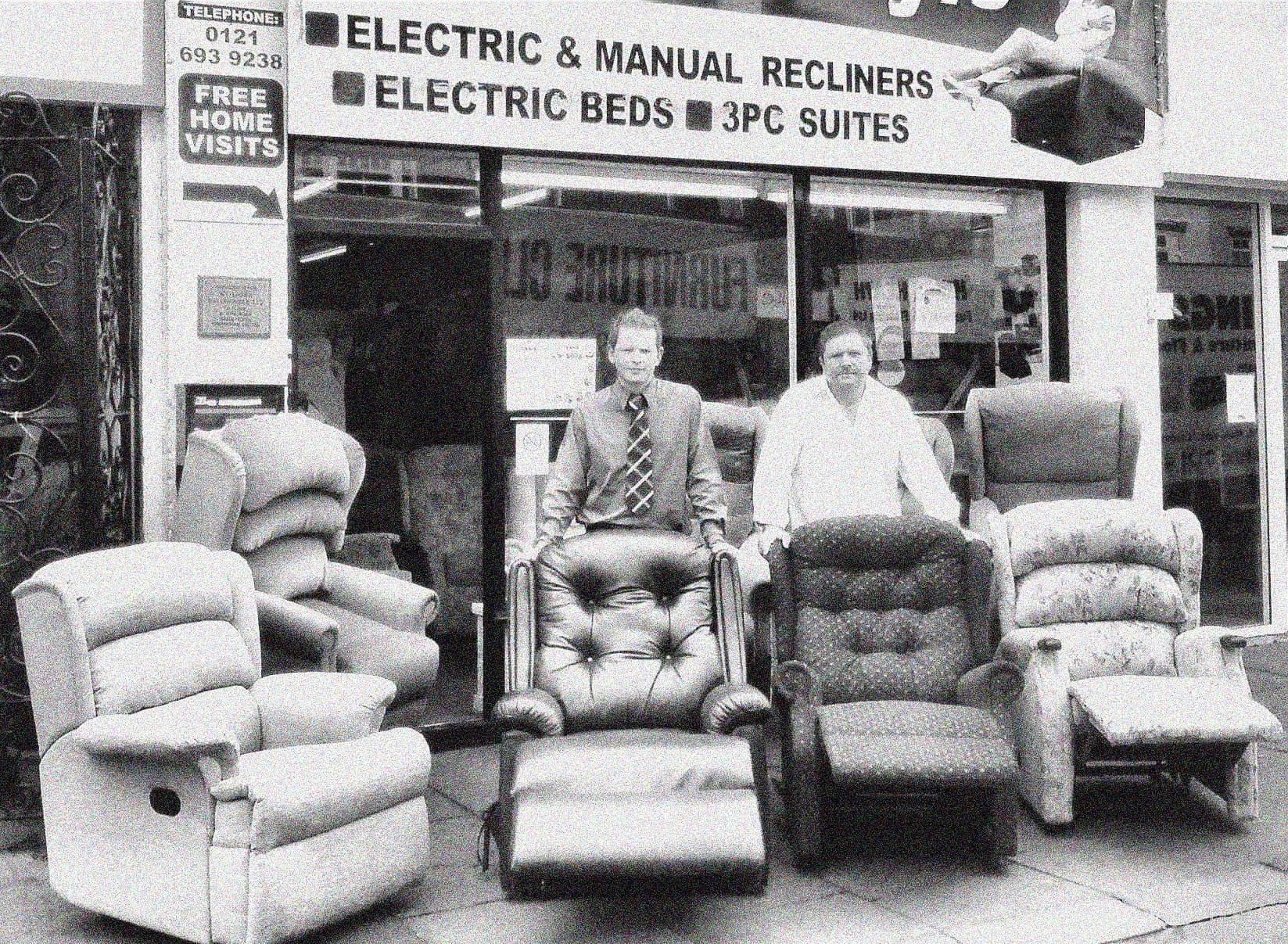
Scott and his dad Chris outside their Kings Heath shop in 1999
The short answer
Seat height, depth and width decide whether a chair fits the person. Overall dimensions and movement clearance decide whether it fits the room. Use the exact measurements for the chair model and size; labels such as petite or standard do not replace those dimensions.
See chairs featured in this guidePublished · Updated
Jump to a section in this guide
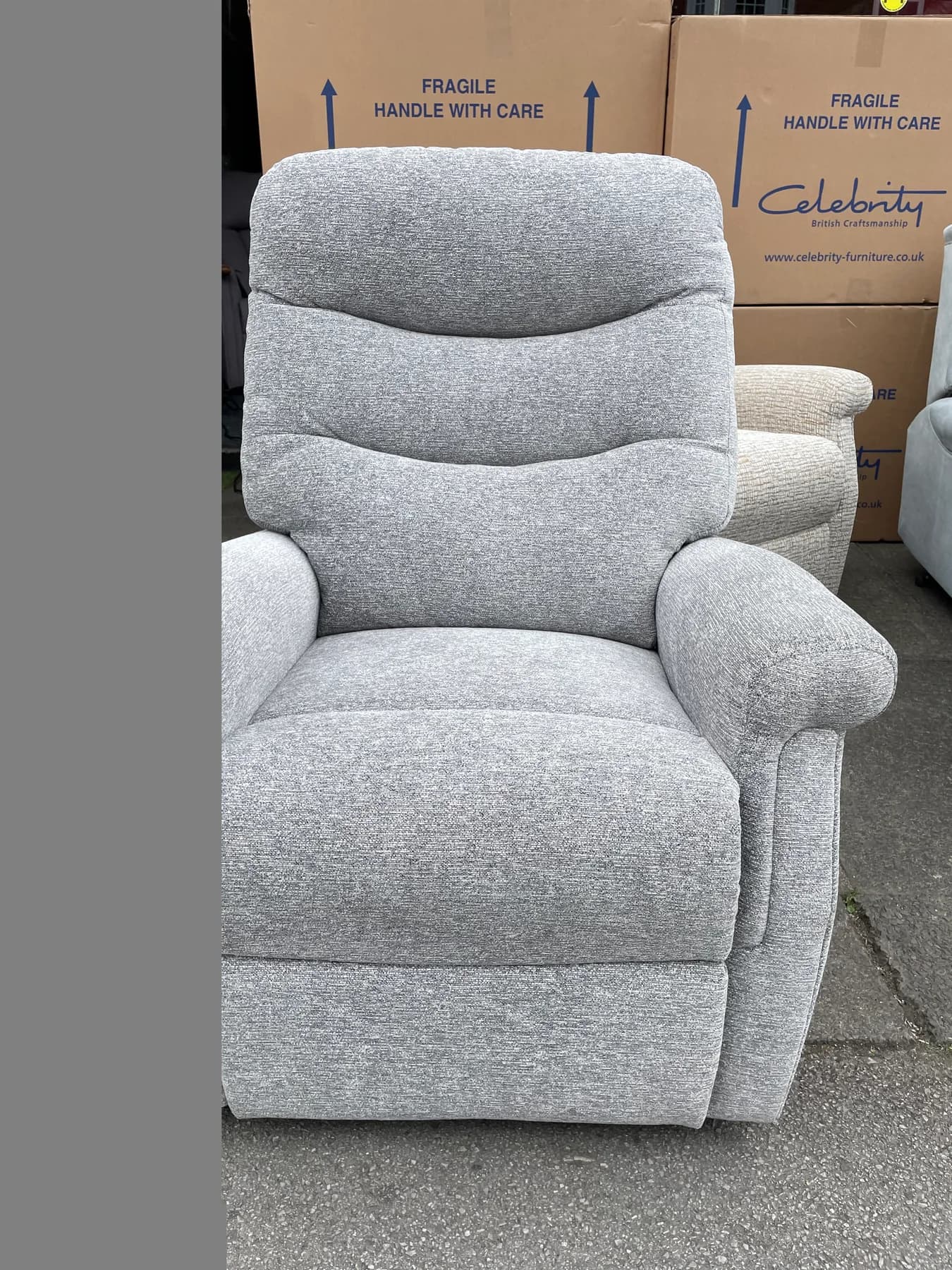
Who this guide helps
For anyone measuring a person, room or delivery route before choosing a riser recliner.
The four numbers that decide comfort
Brochures list many measurements, but four decide whether a chair fits the person: seat height, seat depth, seat width and the user weight limit.
Everything else, including overall width and back height, matters mostly for the room and the route in.
Seat height decides whether feet rest flat. Seat depth decides whether the thighs are supported without pressure behind the knees. Seat width decides whether the user can shift position comfortably.
The weight limit is a safety figure that should never be exceeded or guessed at.
Why petite, standard and large are not enough
Size labels describe proportions within a range, but the actual numbers differ between ranges and even between production years. Two standard chairs from different Celebrity ranges can differ by meaningful margins in seat height and depth.
This is why we publish photographs of the actual chair and confirm exact dimensions with the showroom before delivery: a label is a starting point, not a specification.
Measuring the person
Three personal measurements do most of the work: the floor-to-back-of-knee height, the buttock-to-back-of-knee length, and hip width when seated.
Compare them with the chair’s seat height, depth and width and the fit becomes predictable rather than hopeful.
Where two users share a chair, fit the chair to the primary user and let the other person test it; a compromise that works for the main user usually works for occasional use.
- Floor to back of knee: matches seat height
- Buttock to back of knee: matches seat depth
- Seated hip width: matches seat width
- User weight: stays within the stated limit with margin
Measuring the room and the route
Overall width, depth and height decide whether the chair fits the room and its doorway.
Remember that a reclining chair needs clear space behind and in front to move through its action, and that boxed dimensions can be larger than assembled ones.
Measure the widest door on the route, note any turns, and photograph tight spots so the showroom can check them against the exact chair before delivery is promised.
Your showroom checklist
- Measure floor to the back of the user’s knee
- Measure seated hip width and seat depth needed
- Check the stated user weight limit
- Record overall chair width, depth and height
- Allow for the full rise and recline movement
- Measure the narrowest point on the delivery route
Sources and further reading
Chairs to explore
These photos show individual chairs in our showroom. Call Scott to confirm price and availability.
 In stockCall to confirm
Hollingwell Petite Dual Motor
Celebrity Hollingwell
- Size
- Petite
- Action
- Dual-motor riser recliner
- Cover
- Iona Slate
 In stockCall to confirm
Ashfield Dual Motor
Celebrity Ashfield
- Size
- Large
- Action
- Dual-motor riser recliner
- Cover
- Marble Fossil
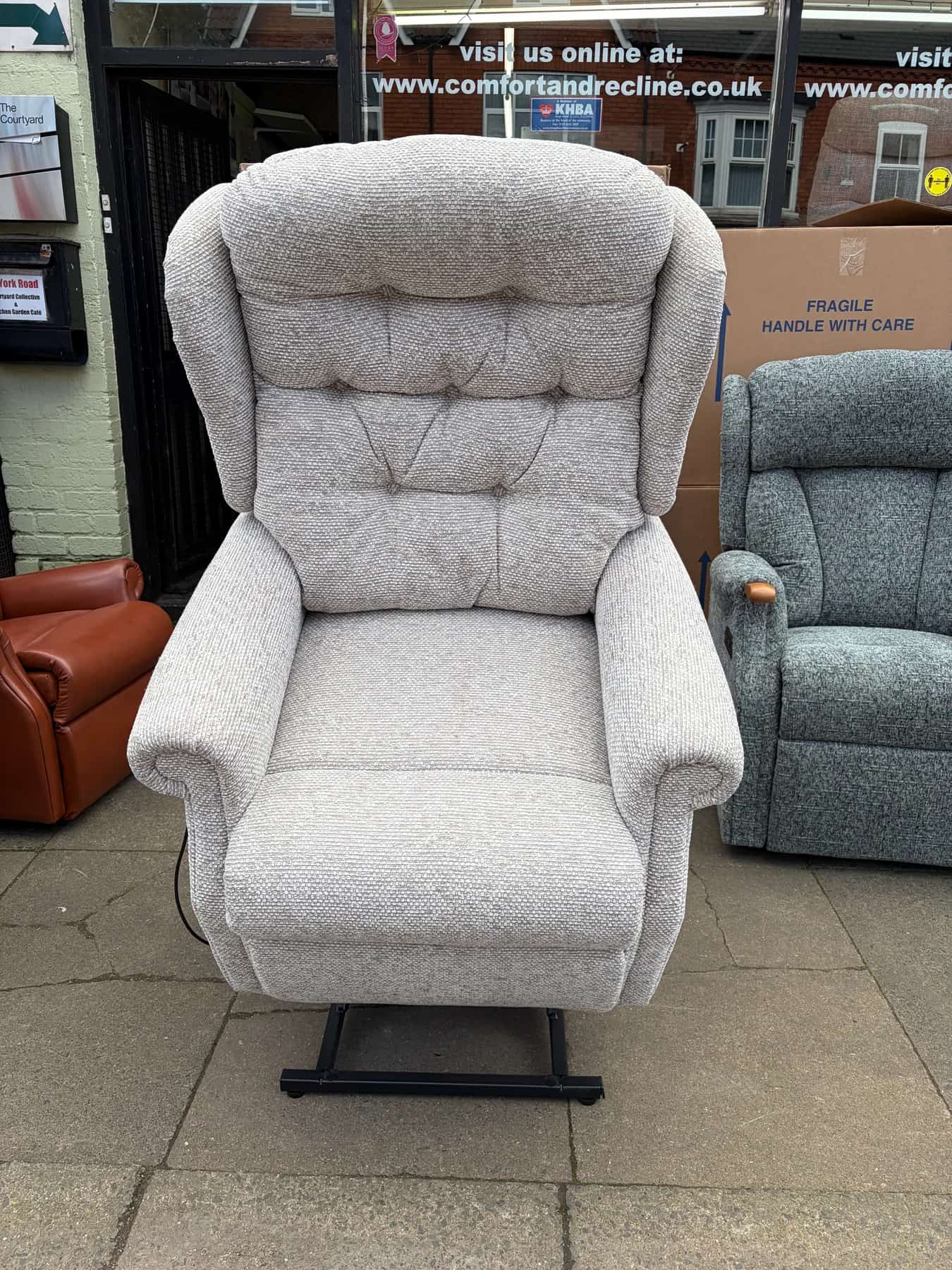 In stockCall to confirm
Woburn Dual Motor
Celebrity Woburn
- Size
- Standard
- Action
- Dual-motor riser recliner
- Cover
- Elgin Oyster